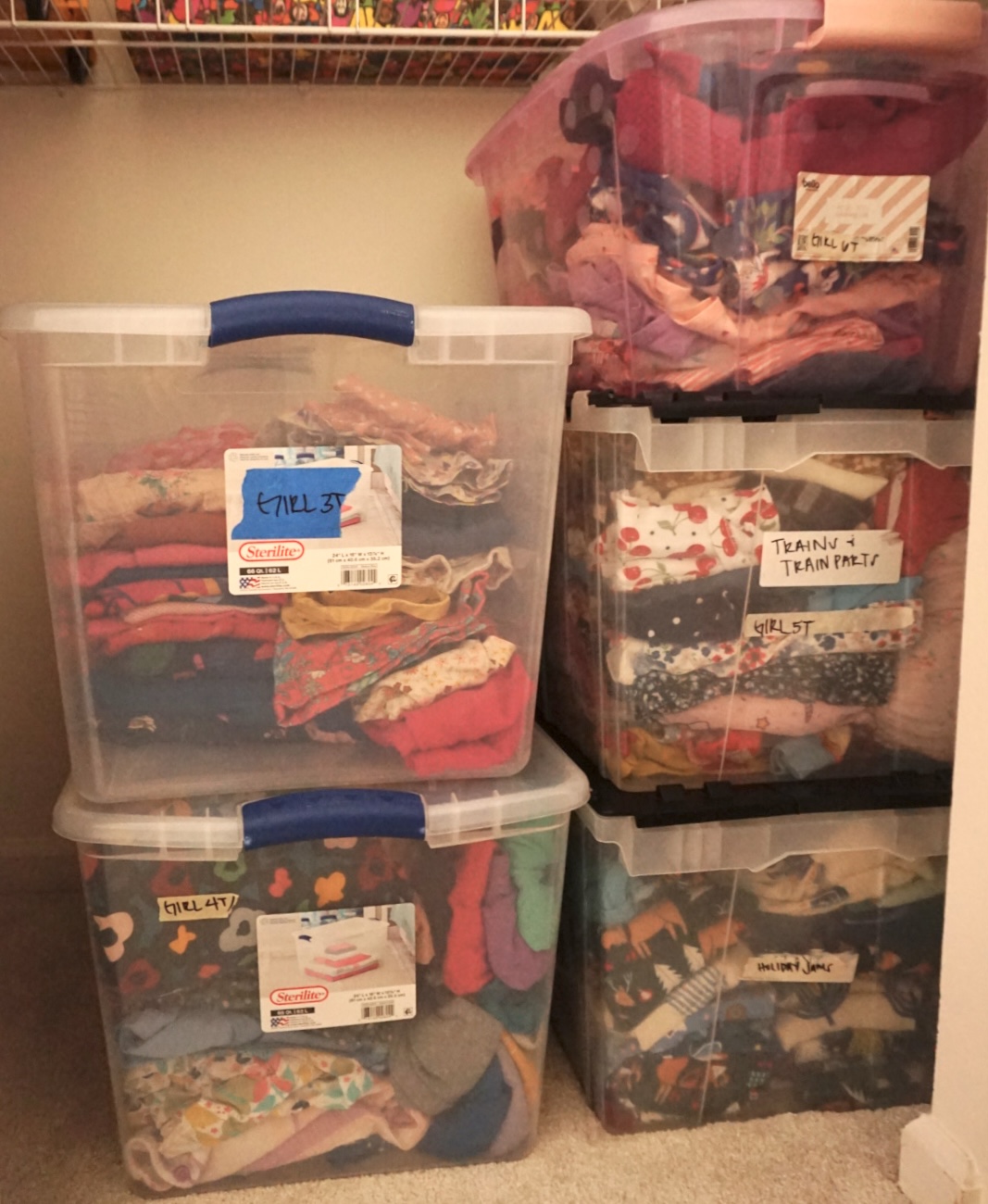
A little over a year ago, I released a podcast episode all about organizing and storing baby and kids’ clothing. At the time, I was newly pregnant with our third baby, and we didn’t know the sex. Fast forward to today—this is an updated take on that same topic, shaped by more experience, more children, and significantly less storage space after downsizing.
Managing children’s clothing can quietly become overwhelming. With how quickly babies grow and how often seasons change, it can feel like you’re constantly cycling through sizes, bins, and piles. This post is a practical look at how to stay on top of it without letting it take over your home.
Why Baby Clothing Feels So Overwhelming 👶
The reality is that babies and toddlers outgrow clothing at a rapid pace. In just the first year, a child can move through multiple sizes—and if you live in a four-season climate, those transitions often overlap with weather changes too.
With multiple children, this multiplies quickly. Clothing becomes something you’re managing almost daily, and without a simple system, it can start to feel like a part-time job.
The goal isn’t perfection—it’s having a rhythm that keeps things moving.
Listen Here 🎙️
Daily Audits While Doing Laundry 🧺
One of the simplest ways to stay on top of clothing is to build awareness into your existing laundry routine. As you fold and put away clothes, you naturally notice what is and isn’t working.
Instead of overthinking it, this becomes a light, ongoing check-in. If something is too small, out of season, damaged, or hasn’t been worn in a while, it gets pulled out right away rather than put back into rotation.
Over time, this habit prevents clutter from building up and keeps closets and drawers functional rather than overcrowded.
The Three Piles Method: Keep, Donate/Sell, Toss
When you do take time to sort clothing more intentionally, everything can generally fall into three categories.
The first is toss, which includes items that are stained beyond repair, have holes that aren’t worth fixing, or cannot be donated such as socks and underwear. Textile recycling programs and certain retailers also offer options for responsibly recycling these items.
The second is donate or sell. Keeping a designated bin or box in a convenient location makes it easy to collect these items over time. The key is to commit to emptying it once it’s full. Scheduling the drop-off ahead of time helps ensure it actually happens instead of sitting in your car for weeks.
The third is storage, which is where things require the most discernment.
Donation and Resale Flow 💛
For donated or resellable clothing, having a simple system makes a big difference. Once a container fills up, it gets removed from the home and brought to its next destination—whether that’s a donation center or a resale shop.
Children’s consignment stores like Once Upon a Child can be a helpful option for items in excellent condition. Not only does this reduce waste, but it also allows you to recycle clothing into new wardrobes at a very reasonable cost.
The key is consistency: collect, fill, and then move it out. No lingering piles.
Storing Baby Clothes: The Reality Check 📦
Storage is often where emotional decision-making comes in. It can feel natural to hold onto baby clothes for future children, but it’s important to recognize a few realities.
Clothing overlap between children—especially if they are born in different seasons—is often much smaller than expected. A winter baby and a summer baby will need very different wardrobes, even within the same size range.
This means that even if you save a large number of items, you will likely still need to purchase seasonally appropriate clothing when the time comes.
A helpful mindset shift is to be selective. Instead of saving everything, focus on keeping only the pieces that truly feel special or meaningful, while letting go of the rest.
Community and Flexibility 🤝
One of the most overlooked aspects of managing children’s clothing is the role of community. Friends, family, and neighbors often have items to share, and it’s common to borrow, swap, or receive hand-me-downs when needed.
This naturally reduces the pressure to store large amounts of clothing “just in case.” It also creates a more flexible, communal approach to raising children—where resources circulate rather than accumulate.
Setting Limits on Storage 📦
Rather than allowing storage to expand indefinitely, it can be helpful to set physical boundaries. Limiting the number of bins per size range forces prioritization and keeps the system manageable.
Storage bins should be clearly labeled by size and category, and kept in a temperature-controlled space within the home when possible. Accessories, shoes, swimsuits, and special categories like maternity or postpartum items can each have their own designated containers.
When space is limited, decisions become clearer—and clutter is naturally reduced.
A Less-Is-More Approach 🌱
Over time, the goal becomes less about holding onto everything and more about creating a system that supports your current life. Saving fewer items means less to manage, less to sort, and less to store in the future.
It also creates space—both physically and mentally—for new seasons, new children, and new needs.
Not everything needs to be preserved for the future. In many cases, letting go creates more freedom than holding on.
Final Thoughts ✨
If you take away anything from this, let it be this:
- Build small, consistent habits around laundry and sorting
- Use a simple three-pile system when decluttering
- Be intentional and limited with what you store
- Let community fill in the gaps when needed
- Give yourself permission to keep less
Managing baby and kids’ clothing doesn’t have to be overwhelming. With a few steady rhythms, it can become something that quietly supports your home rather than burdens it.
And sometimes, the most practical system is also the most freeing one.