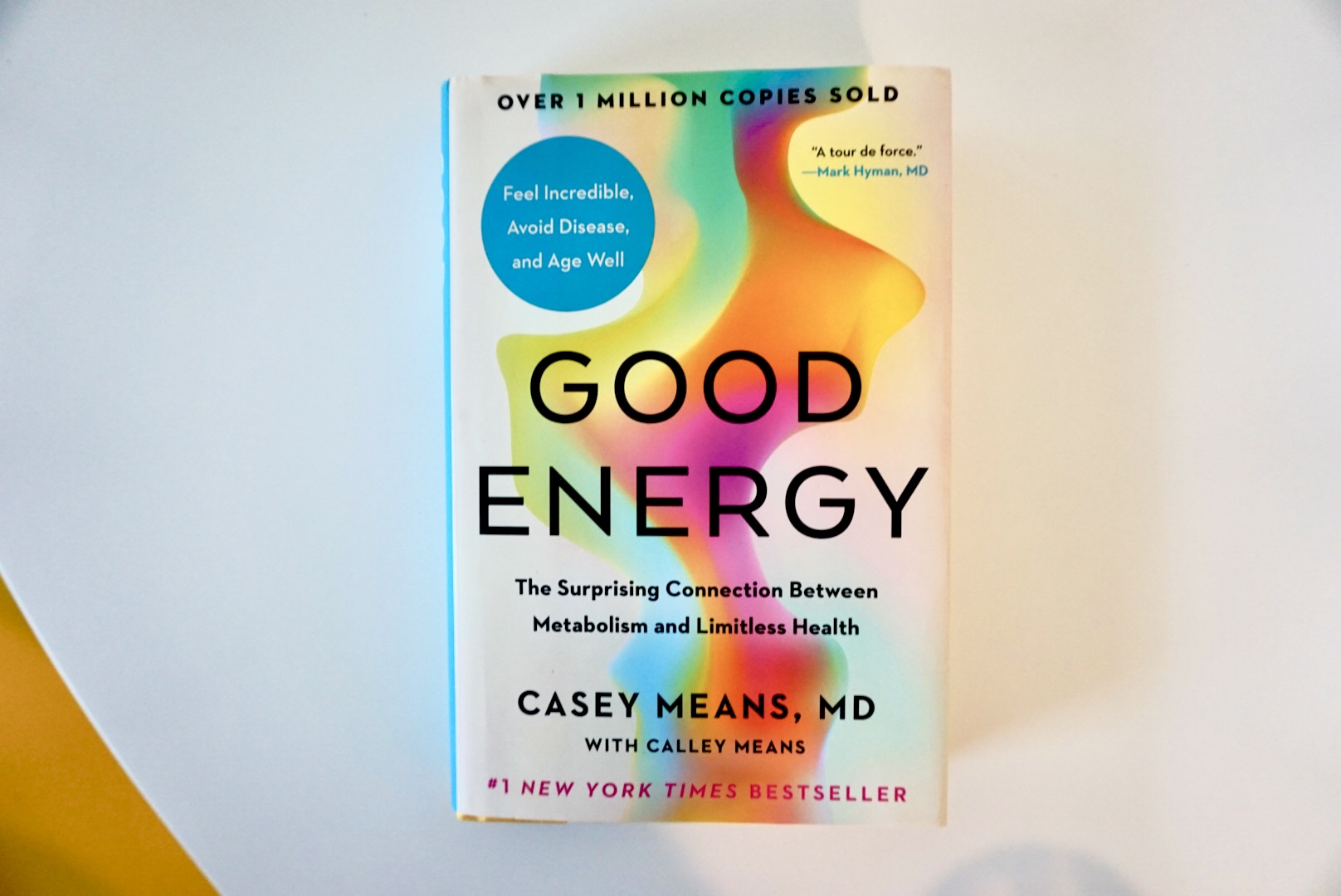
Why Good Energy Stuck With Me ✨
Today we’re diving into Good Energy by Dr. Casey Means. This book stayed with me because it offered a simple but radical reframe: nearly every chronic condition we see today—from fatigue and depression to infertility, heart disease, and dementia—can be traced back to how well our cells make and use energy.
When cells are underpowered or overwhelmed, inflammation follows. Inflammation isn’t the villain—it’s the immune system trying to help. But when that response becomes constant, it creates collateral damage. This is why metabolic dysfunction and chronic inflammation so often appear together.
Symptoms like brain fog, headaches, digestive issues, joint pain, anxiety, low mood, and constant fatigue have become so normalized that we treat them as a rite of passage—instead of what they really are: warning signs 🚨.
Listen to the Episode
The Perfect Storm of Modern Life 🌪️
Dr. Means describes modern life as a perfect storm for mitochondrial damage. Our cells are constantly overwhelmed by:
- Chronic overnutrition
- Ultra-processed food
- Sleep deprivation
- Chronic stress
- Blue light at night
- Sedentary days
- Environmental toxins
- Circadian rhythm disruption
- Constant temperature-controlled comfort
We eat about 20% more calories than people did 100 years ago—and anywhere from 700–3,000% more fructose. Our bodies were never designed for this load.
When you hear statistics like 74% of U.S. adults being overweight or obese, and 94% showing signs of metabolic dysfunction, it stops sounding like a personal failure—and starts sounding like a systemic problem 😬.
The Five Markers of Metabolic Health 🧬
One of the most empowering parts of Good Energy is how Dr. Means breaks metabolic health down into five simple, commonly available markers. These aren’t obscure tests—they’re usually included in routine care. Together, they act like a dashboard for how well your cells are making and using energy.
1. Triglycerides: Your Overflow Tank ⛽
Triglycerides are stored fat circulating in your bloodstream, often created from excess sugar, refined carbs, and alcohol. In a healthy system, they’re burned between meals. Elevated levels suggest more fuel is coming in than your cells can use.
Optimal target: under 80 mg/dL
2. HDL Cholesterol: The Cleanup Crew 🧹
HDL is often called “good cholesterol” because it helps remove excess cholesterol from the bloodstream and return it to the liver. Higher HDL is associated with lower inflammation and more efficient energy transport.
Optimal range: roughly 50–90 mg/dL
3. Fasting Glucose: Can Sugar Get Into Your Cells? 🔑
Fasting glucose measures how much sugar remains in your bloodstream after not eating for several hours. Ideally, glucose should be inside your cells, fueling them.
When fasting glucose rises, it often signals insulin resistance—glucose is everywhere, but cells are starving.
Optimal range: 70–85 mg/dL
4. Blood Pressure: Your Pipes Under Pressure 🚰
Blood pressure reflects the health of your blood vessels, which deliver oxygen and nutrients to every cell. Elevated blood pressure often travels with insulin resistance and inflammation.
Optimal target: under 120/80
5. Waist Circumference: Where Energy Is Stored 📏
Fat stored around the abdomen is metabolically active—it releases inflammatory signals that disrupt insulin function. Waist circumference is one of the strongest indicators of metabolic risk.
Optimal target for women: under 31.5 inches
There are additional markers she discusses, but these five are the quickest and easiest ways to get a general picture of your overall metabolic health.
What These Markers Are Really Asking 🤔
All five markers ask the same question: Do your cells have steady access to fuel, and can they use it efficiently?
Only about 6–7% of Americans meet all five targets without medication. That means most people are living with metabolic dysfunction—often without knowing it.
Dr. Means offers a powerful metaphor: our cells are like trillions of tiny infants. When they’re distressed, they cry. Fatigue, cravings, mood swings, skin issues, and pain are the cries—not character flaws.
These markers aren’t a grade. They’re feedback 🧭.
Children, Teens, and the Long-Term Consequences 🧒
One of the most sobering sections of the book focuses on children. Childhood obesity has tripled since the 1970s. Conditions like non-alcoholic fatty liver disease—once seen almost exclusively in alcoholics—are now common in kids.
Processed food, sugary drinks, sedentary days, late bedtimes, stress, and screens have become the norm.
Later in life, metabolic dysfunction often shows up as stroke, dementia, and Alzheimer’s. The brain uses more glucose than any other organ, so when energy processing breaks down, the brain often suffers first.
A Clear-Eyed Look at the Healthcare System 🏥
Dr. Means is careful to critique the system—not doctors. Physicians are working within incentives that prioritize billing, coding, and symptom management over root causes.
We’ve built a massive food industry that profits from cheap, addictive products and a healthcare industry that profits when people stay sick. Lifestyle, nutrition, and prevention rarely fit into the model.
Modern medicine is extraordinary for acute and life-saving care. But when it comes to chronic, everyday illness, most of the responsibility falls back on us.
There Is Real Hope 🌱
The hopeful core of Good Energy is this: most chronic disease is preventable—and often reversible—through metabolic healing.
Key pillars include:
- 7–8 hours of quality sleep
- Consistent sleep and wake times
- Morning light exposure
- Real, nutrient-dense food
- Daily movement (7,000 steps as a floor)
- Stress regulation
- Shorter eating windows
- Reduced blue light at night
Health isn’t one pill or one diet. It’s rhythm 🎶.
Movement as a Way of Life 🚶♀️
One striking insight: people who take short walks every 30 minutes have lower post-meal glucose and insulin spikes than those who exercise intensely but remain sedentary the rest of the day.
Movement works best when it’s distributed—like sipping water throughout the day instead of chugging it all at once.
Those hourly stand reminders on wearables may be annoying, but they’re grounded in solid science.
A Personal Reflection 💭
I finished Good Energy feeling both sobered and hopeful. Sobered because the system isn’t designed to protect us—and hopeful because small daily choices truly matter.
After reading the book twice, I began tracking my health more intentionally. I’m currently meeting all five metabolic markers, something only a small percentage of Americans can say—and it didn’t require perfection, just consistency.
Dr. Means encourages readers to take one small step. Earlier dinners. Better sleep. More daylight. Fewer ultra-processed foods. Nothing extreme—just steady change.
Our cells are resilient. They’re always ready to heal when we remove what harms them and restore what nourishes them.
Final Thoughts 💛
You don’t need to agree with everything in this book to benefit from it. Take what resonates. Leave the rest.
Better sleep, lower stress, real food, daily movement, and light-aware living help almost everyone—and they carry very little downside.
That alone makes this message worth spreading.