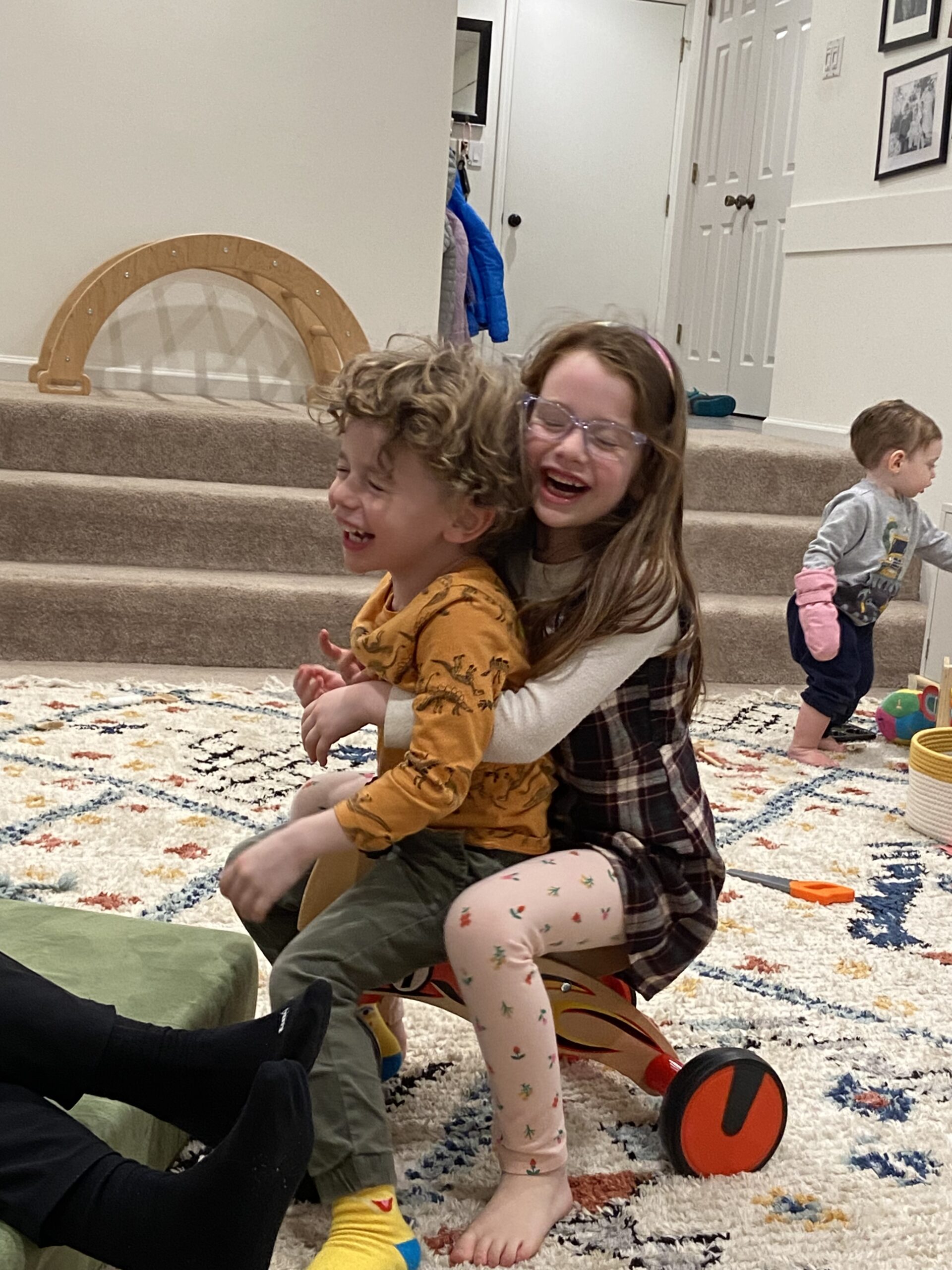
It’s been a fantastic (and very full) week over here. We’ve had contractors inside the house, contractors outside the house, and what feels like every home project my husband and I have been queueing up finally coming together at once. And honestly? It feels so good.
We’re about 95% finished with our backyard renovation, and it’s everything I hoped it would be. A fully fenced yard, fresh turf, playground mulch, curved planting beds for trees and flowers, a fountain, and brand-new deck furniture. Sitting outside in the evenings has been pure bliss — truly one of the best feelings. And with all that goodness happening, it felt like the perfect time to talk about something very real and very necessary: keeping the playroom under control.
🎧 Listen to the Episode
Episode 134 of The Raw on the Cooked
In this episode, I walk through exactly how I keep our playroom clean, tidy, and organized — without perfection, without burnout, and without expecting unrealistic things from myself or my kids.
Why the Playroom Needs Its Own System
If you have kids, you already know this to be true:
If you don’t stay on top of their stuff, their stuff will absolutely dominate your home.
Back in Episode 119, I talked all about decluttering and organizing the kitchen to create better flow and easier meal planning. This episode is very similar — but focused entirely on the playroom.
Because toys, books, art supplies, and general kid clutter are their own beast.
For this episode, I wanted to clearly separate two things that often get lumped together:
- Keeping the playroom clean and tidy
- Keeping the playroom organized
You really can’t have one without the other — but they are different skills.
Part One: Keeping the Playroom Clean & Tidy 🧹
Before we get into toys and bins, I want to share a cleaning method that completely shifted how I approach messy spaces. A few weeks ago, I listened to the audiobook How to Keep House While Drowning by KC Davis, and one concept in particular stuck with me: her five types of clutter.
According to KC Davis, every messy room contains some combination of:
- Trash
- Dishes
- Laundry
- Things that have a home but are out of place
- Things that don’t have a home yet
At first, this felt… wrong. Trash? Dishes? Laundry? In a playroom? But then I really thought about it.
Why This Actually Makes Sense in a Playroom
At the end of almost every day, I will find:
- Dirty socks or discarded clothes
- Snack crumbs and empty bowls
- Half-eaten apples on the floor
- Water bottles left behind
- Torn art projects
- Broken or abandoned toys
Kids snack in the playroom. They watch movies there. They play hard. Of course those things end up there.
The Five-Step Playroom Reset (That Actually Works)
Here’s how I use KC Davis’s method specifically for our playroom:
- Pick up all the trash and put it in a bag
- Gather all dishes and place them in the sink (don’t wash yet)
- Collect all laundry and put it in a pile
- Pile items that have a home in one spot
- Pile items without a home in a separate spot
- Put everything back where it belongs
- Assign homes to leftover items — or donate/toss
This method keeps me focused and prevents distraction. It’s simple, fast, and works beautifully for a space that gets absolutely destroyed in one afternoon.
As for actual cleaning? I vacuum and spot-clean as needed. I used to do a deep weekly clean — but honestly, I’m pregnant, it gets gross again immediately, and no one really cares. Now it’s an as-needed situation, and that’s okay.
Our Realistic Playroom Rhythm
Our playroom is in the basement, so it’s very much out of sight, out of mind. It’s not part of our nightly whole-house tidy. Sometimes it stays messy for two or three days — and that’s fine.
Before afternoon movies, we do a five-minute “power tidy”:
- Set a timer
- Everyone pitches in
- No perfection required
That’s where organization really matters — because tidy is only possible if the system is easy.
Part Two: Organizing the Playroom (Without Losing Your Mind)
Work With What You Already Have
I’m a big believer in physical boundaries. Closets, shelves, cubbies, cabinets — whatever storage your home already has is what you should be working with. You don’t need to buy more containers to house too much stuff. A home should generally be able to hold what lives in it — especially modern homes with decent storage.
Two Types of Toy Rotation That Actually Help
1. Physical Relocation
Sometimes toys aren’t “boring” — they’re just in the wrong place.
For example:
- Dress-up clothes lived in the playroom and were ignored
- I moved them to the kids’ bedroom closet
- Suddenly, they’re constantly dressing up
Same with board games. We relocated them upstairs because that’s where we actually play them. If something isn’t getting used, try moving it before getting rid of it.
2. Traditional Toy Rotation
This is the classic method:
- Box up toys that haven’t been touched in weeks
- Store them out of sight
- Bring them back later or donate them
Toy rotation:
- Reduces overwhelm
- Makes cleanup easier
- Makes old toys feel new again
It’s especially helpful around birthdays and holidays when new things flood in.
A Few More Organizational Truths
- Watch for broken or outgrown toys and deal with them regularly
- Don’t micro-organize daily — that’s your job, not your kids’
- Use large baskets for stuffed animals and soft toys
- Catch-all bins are allowed and encouraged
- Do occasional “basket audits” every few weeks
Your kids are not going to sort tiny pieces perfectly — and that’s okay.
My Final Playroom Philosophy 🤍
A clean, tidy playroom doesn’t mean:
- No mess
- No clutter
- No chaos
It means:
- Easy systems
- Clear boundaries
- Realistic expectations
Keep a donation bin somewhere out of sight. Stick to the storage you have. Use baskets wisely. Let go of perfection. And remember — a lived-in playroom is not a failure. It’s proof that your kids are actually using the space. Thank you so much for tuning in. I hope you found something helpful here, and I’ll see you back next week 🤍