Today is Yom Kippur if you’re reading this in real time. I’m not actually writing in real time — as you’re reading this, I’m in synagogue, fasting, praying, and unplugging completely. But I didn’t want to skip my Thursday post just because it’s a holiday.
Today’s topic connects beautifully to Yom Kippur: the Sabbath. Most people don’t realize this, but the Sabbath is actually considered the most important Jewish holiday. It’s weekly, it’s in the Ten Commandments, and it’s ancient.
I want to share why the Sabbath is so meaningful, how it looks in our home (imperfectly but joyfully), and how you can create your own version — even in 2025, with all our distractions and busyness.
🌿 Why the Sabbath Matters
We’re not built to “go, go, go” endlessly. Genesis 2:2–3 says:
“On the seventh day God ended His work which He had done, and He rested. Then God blessed the seventh day and sanctified it.”
If God Himself modeled rest, we can, too. The Sabbath is a rhythm — a sacred pause for our bodies, souls, and homes. For me, it’s not just a spiritual practice but a weekly re-grounding for our family.
🕯 Our Journey into Sabbath
When my husband and I first started marking Shabbat, we began small:
- Lighting candles on Friday nights
- Slowly adding in challah and red wine
- Building the Friday night meal into a ritual
- Turning Saturdays into Sabbaths…
Over time, as our family grew (four kids now!), Shabbat became non-negotiable: candles, wine, challah, and a slower pace. At first it was store-bought challah. Now I bake my own. We found beautiful, colorful candles at our local grocery store. We use heirlooms: our wedding candlesticks, my husband’s kiddush cup passed down from his father, and my parents’ challah board.
Little by little, this became a treasured rhythm — not a chore.
📱 Unplugging: Our 25-Hour Reset
Once the candles are lit, we put our phones and laptops away until Saturday evening. My phone automatically goes on Do Not Disturb from Friday at 5:30 p.m. to Saturday at 6:30 p.m. I toss it in a drawer so I’m not tempted.
It’s a quiet rebellion against hustle culture, algorithms, and the myth of constant productivity. And you know what? There’s almost never an “emergency” on Saturday. People know now that I’ll reply after Shabbat ends. Or if we’re meeting friends at the park, there’s no need for the “on our way” text message.
🥖 What Our Shabbat Looks Like
We’re not Orthodox, and our version is flexible (sometimes very flexible!). For example:
- We light candles and eat at 5:45 p.m. even if sunset is 8:30 in summer 🌞
- We try not to drive or spend money, but sometimes life (or family visits) makes it tricky 🚗
- Paper plates on Friday night mean fewer dishes 🙌
- We prep meals ahead so Saturday is leftover-friendly or crockpot-easy 🍲
Our Saturdays are simple:
- Slow mornings with coffee ☕
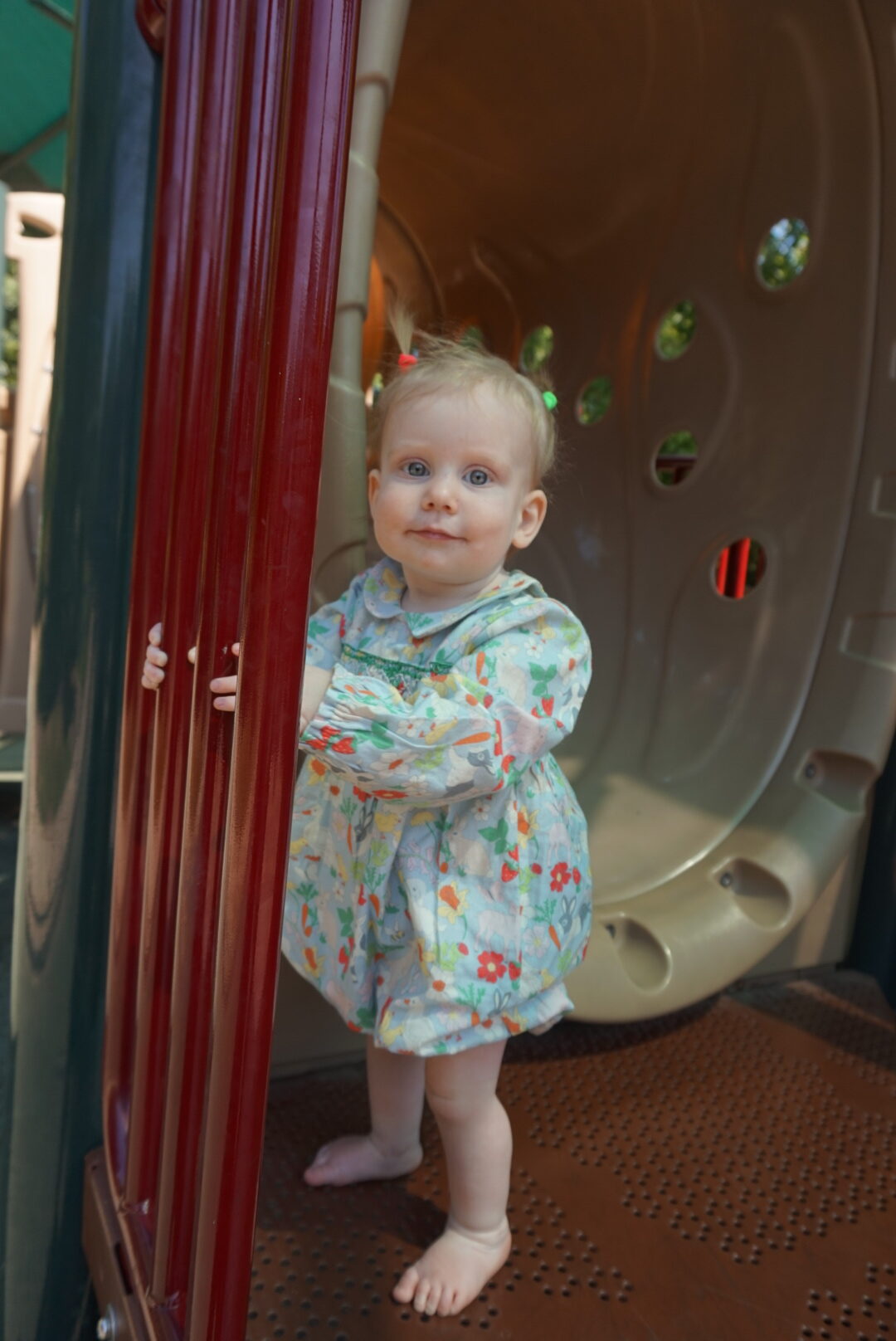
- Family walks or playground visits
- Reading (right now, I’m deep into Dennis Prager’s Exodus and Genesis, Abraham Twersky’s Daily Living, Weekly Living, and D’vorah Miller’s Up to God) 📚
- Naps, puzzles, and small rituals
- No phones, no laptops, no online shopping, no driving (sometimes)
Sometimes it’s messy and chaotic (four kids, naps never line up), and sometimes it’s the most peaceful 25 hours of the week.
🧩 Small Joys & Traditions
- We often work on a big puzzle on the dining table — my Father’s Day and birthday gift tradition for my husband. The library even lends out puzzles now, so we’re planning to try that!
- The kids help set the Shabbos table and get a special drink (grape juice or something sparkling instead of water or milk).
- My husband is stricter than I am about no “work” — no yard work, no home projects.
- I like to sneak in a long shower, do my nails, or cross-stitch.
It’s not about perfection — it’s about rhythm, intention, and peace.
🌸 What I’ve Learned About Building Sabbath
One of my rabbis’ wives shared this idea:
“You can’t go 60 mph six days a week and expect to come to a complete stop on the Sabbath.”
She practices “mini-Sabbaths” throughout the week — small pauses — so Saturday doesn’t feel jarring. I’ve started doing that too. It makes a difference.
And for you: start small. Maybe it’s just turning off your phone for a few hours. Maybe it’s lighting candles. You’ll be surprised how quickly you crave it.
🙏 Closing Thought
The Hebrew word for Sabbath literally means “to stop.” Once a week, we stop. We breathe. We reset.
“Be still, and know that I am God.” (Psalm 46:10)
If you’ve been feeling exhausted, stretched thin, or constantly “on,” consider trying your own version of a Sabbath. Start tiny. Build slowly. I think you’ll be surprised at how restorative it is.
Ash, this post is dedicated to you (though I know you’ll never read this) 🥂