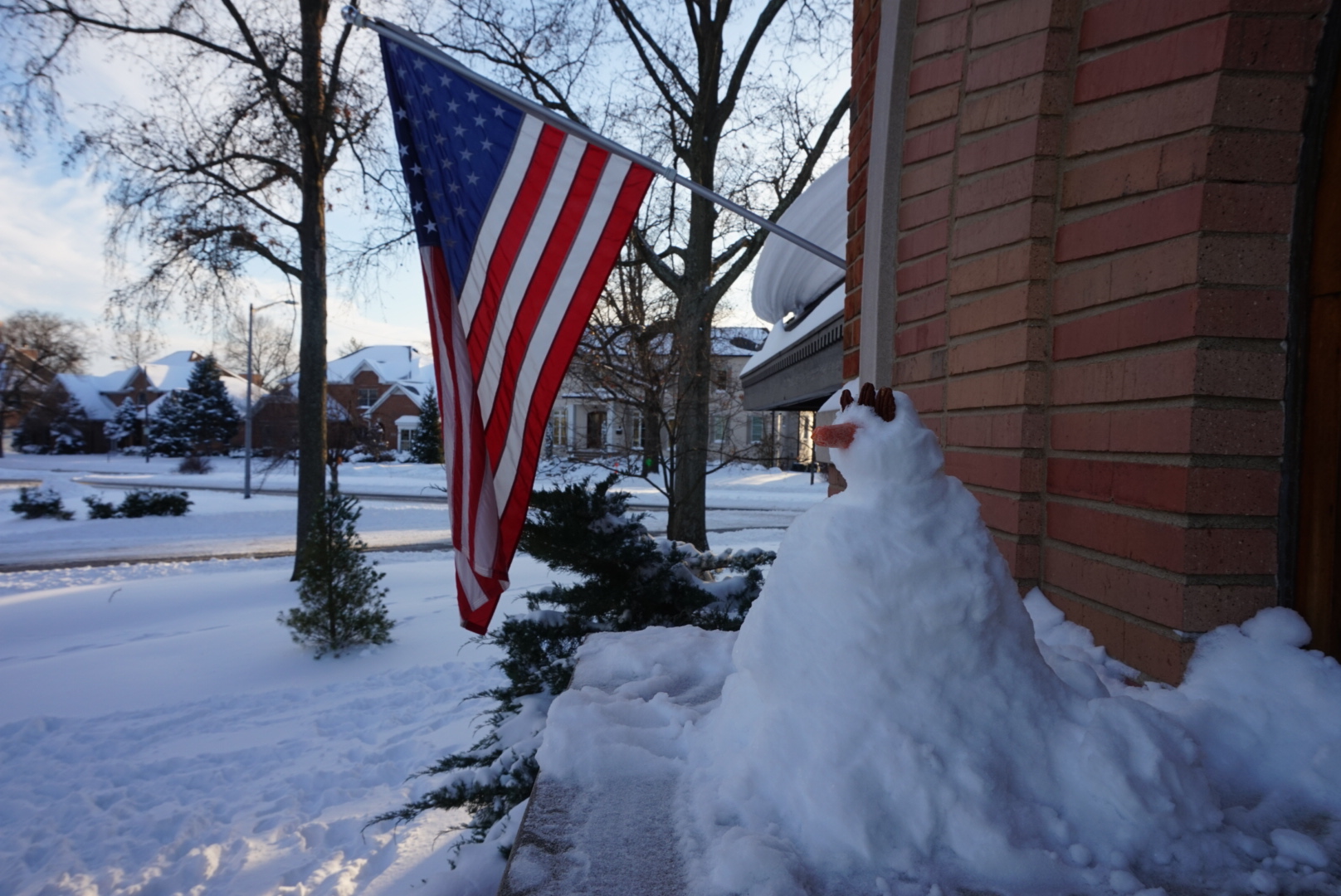
Greetings from a very snowy, very cold St. Louis. Single digits all week, which made our daily stroller walks non-existent. I miss being outside. I miss my walks. And yet, winter has a way of forcing stillness—of rerouting us when the direct path is closed. Which feels fitting for Parsha Beshalach, where God intentionally leads the Israelites the long way around, not because it’s easier, but because it’s kinder.
Have No Fear
We’re now in the home-stretch on the Pharaoh saga. Despite everything, he gathers six hundred of his best chariots, officers and all, and comes to retrieve his slaves. God is ready with His final plan: the sea. As the Egyptians approach, the Israelites panic—understandably so. Moses soothes them with words we return to again and again: 14:13-14 But Moses said to the people, “Have no fear! Stand by, and witness the deliverance which the Lord will work for you today; for the Egyptians whom you see today you will never see again. The Lord will battle for you; you hold your peace!” Do not be afraid. We see it over and over and over, and it is comforting every single time. I hold these words very close to my heart.
God asks Moses why he is crying out to Him—he must tell the Israelites to go forward, lift his rod, and hold it over the sea. This is yet another moment in the Exodus story where God asks the Israelites to participate in their own deliverance – they still need to act – just as they did in last weeks parsha, with marking their lintels and doorposts in the blood from an animal they sacrificed. As St. Augustine famously said, “Pray as if everything depends on God. Work as if everything depends on you.”
The aforementioned pillar of cloud shifted from in front, and took up a place behind the Israelites, putting distance between the army of the Egyptians and the army of Israel (14:19-20). A strong east wind turned the sea into dry ground, the waters were split, forming a wall on the right and the left, and the Israelites were able to walk on dry ground. At last, when it’s finally too late, the Egyptians recognize The Lord as God, but it’s too late, they drowned.
🎵 They Sank Like Lead in the Majestic Waters 🎵
14:31 And when Israel saw the wondrous power which the Lord has wilded against the Egyptians, the people feared the Lord; they had faith in the Lord and His servant Moses. I find this verse fascinating, because it comes on the heels of ten miraculous plagues. They were there. They lived it. And yet—did they really?
Many of the plagues primarily affected the Egyptians, and several (blood, frogs) were even replicated by magicians. And the plagues that spared the Israelites—hail, darkness, the death of the firstborn—while miraculous, were not experienced firsthand.
But the sea? The sea they walked through. Their feet moved over dry ground where water should have been. They watched it close in on an entire army. They saw bodies wash up on the shore. Now that was undeniable. And now, finally, they trusted—not just acknowledging God’s existence, but placing their faith in Him. The Lord fulfills His promises.
The opening of Chapter 15 proves this, as 15:1-19 is written in Hebrew poetry and sung like a song – it’s all about the Egyptians drowning in the sea. Yes, there is Gods glory, and the deliverance, and all the good in there too, but there isn’t one word about anything prior to the drownings and the sea.
Grumblings Over Food and Water
After traveling for three days, the Israelites found no water. They finally find some, but they cannot drink it because it was bitter (they named it Marah, which means bitter in Hebrew). The Lord shows Moses a piece of wood, which he is to throw into the water, which turned it sweet. Then the Lord says something really interesting, 15:26 He said, “If you will heed the Lord your God diligently, doing what is upright in His sight, giving ear to His commandments and keeping all His laws, then I will not bring upon you any of the diseases that I brought upon the Egyptians, for I the Lord am your healer.” Wow, that is so powerful. And it’s something I think we should keep in mind. There’s more grumbling over water in chapter 17 too. At which point even Moses grows weary of these people, 17:4 Moses cried out to the Lord, saying, “What shall I do with this people? Before long they will be stoning more!”
And right on the heels of the water episode, the community grumbled about food. Romanticizing their meals back in Egypt. This is when mana comes into play, 16:4-5 And the Lord said to Moses, “I will rain down bread for you from the sky, and the people shall go out and gather each day that day’s portion – that I may thus test them, to see whether they will follow My instructions or not. But on the sixth day, when they apportion what they have Brough in, it shall prove to be double the amount they gather each day.”
What He is testing for is whether Israel will keep His holy day, the Sabbath. I could dedicate an entire post to the Sabbath – and perhaps in the future I will – so we’ll simply move forward for now. Though I will make this point now, it is as clear as day that honoring and keeping the Sabbath is in the Top 10 – see what I did there? <wink>
What We Learn About Manna
The Lord hears the grumbling, 16:12 …..By evening you shall eat flesh, and in the morning you shall have your fill of bread; Quail appeared and covered the camp in the evening, and in the morning there was a fall of dew, once the dew lifted, a fine flaky substance, as fine as frost was on the ground (16:13-14). Each person gathers an omer, which turns out to be exactly the right amount. An omer is a tenth of an ephah, an ephah equals about thirty-five liters (16:36). As the one who gathered much had no excess, and who gathered little had no deficiency, it was exactly the right amount (16:18) for each person. Which is so incredible. It reminds me a lot of nursing a baby, and how a mother’s body provides exactly the right nutrients to grow her child.
We also learn that manna was like coriander seed, white, and it tasted like wafers in honey (16:31). The manna sustained the Israelites for forty years, until they came to a settled land (16:35).
Moses warns them not to leave anything they gather from day to day. But the ones who paid no attention, realized quickly that it became infested with maggots and stank. They needed to gather it in the morning, because when the sun grew hot, it would melt (16:21). And on the sixth day, the gathered double the amount of food, two omers for each person. They were to bake or boil and set aside their second portion for the holy sabbath, and all that was put aside would keep until morning. The very same substance that decays when hoarded during the week is preserved when set aside for holiness. This is not accidental. The manna is teaching us that our timing matters, that our obedience creates a blessing. Shabbat is not a risk—it is a gift.
However, some people still went out on the seventh day to gather, even though they were warned there will be none. At this point, The Lord is exasperated with these people, 16:28 And the Lord said to Moses, “How long will you men refuse to obey My commandments and My teachings? Mark that the Lord has given you the sabbath; therefore He gives you two days’ food on the sixth day. Let everyone remain where he is: let no one leave his place on the seventh day.”
By now, the lesson should be clear. The question is no longer whether God will provide—but whether the people can learn to trust that He already has. The manna also raises deeper questions about Shabbat—questions I’m still sitting with. What does rest truly look like in a modern world? What does it mean to obey this commandment with intention, not fear? I may return to this in a future post.
The remainder of the Parsha brings us to the battle with Amalek. Joshua gathers men to fight, while Moses ascends to the top of a hill, the rod of God in his hands. God does the heavy lifting on Israel’s behalf—but only when Moses’ hands are raised. When his hands fall, Amalek prevails (17:11).
This detail matters. Victory does not come from strength alone, nor from prayer alone, but from alignment. Moses cannot fight, and Joshua cannot pray; each has a role. And Moses cannot do it by himself. Aaron and Hur must step in to support his arms when he grows weary. Leadership, faith, and endurance here are communal acts.
Israel ultimately overwhelms Amalek, but the Torah does not allow the moment to close neatly. Instead, we are commanded to remember this war throughout the ages. Amalek is not just an external enemy—it represents the force that attacks when we are tired, newly freed, unfed, and unsure. The voice that whispers doubt right after redemption, that strikes at the stragglers, that appears precisely when faith is hardest to sustain.
Takeaways for the Week
- God may lead us the long way around—not to make life harder, but to make the journey kinder.
- Faith deepens when we stop waiting for proof and start walking forward, even when the ground still looks impossible.
- Provision is daily, not stockpiled—and learning to trust that today’s manna is enough is holy work.
- Sometimes, the holiest thing we can do is hold one another up when our arms begin to fall.