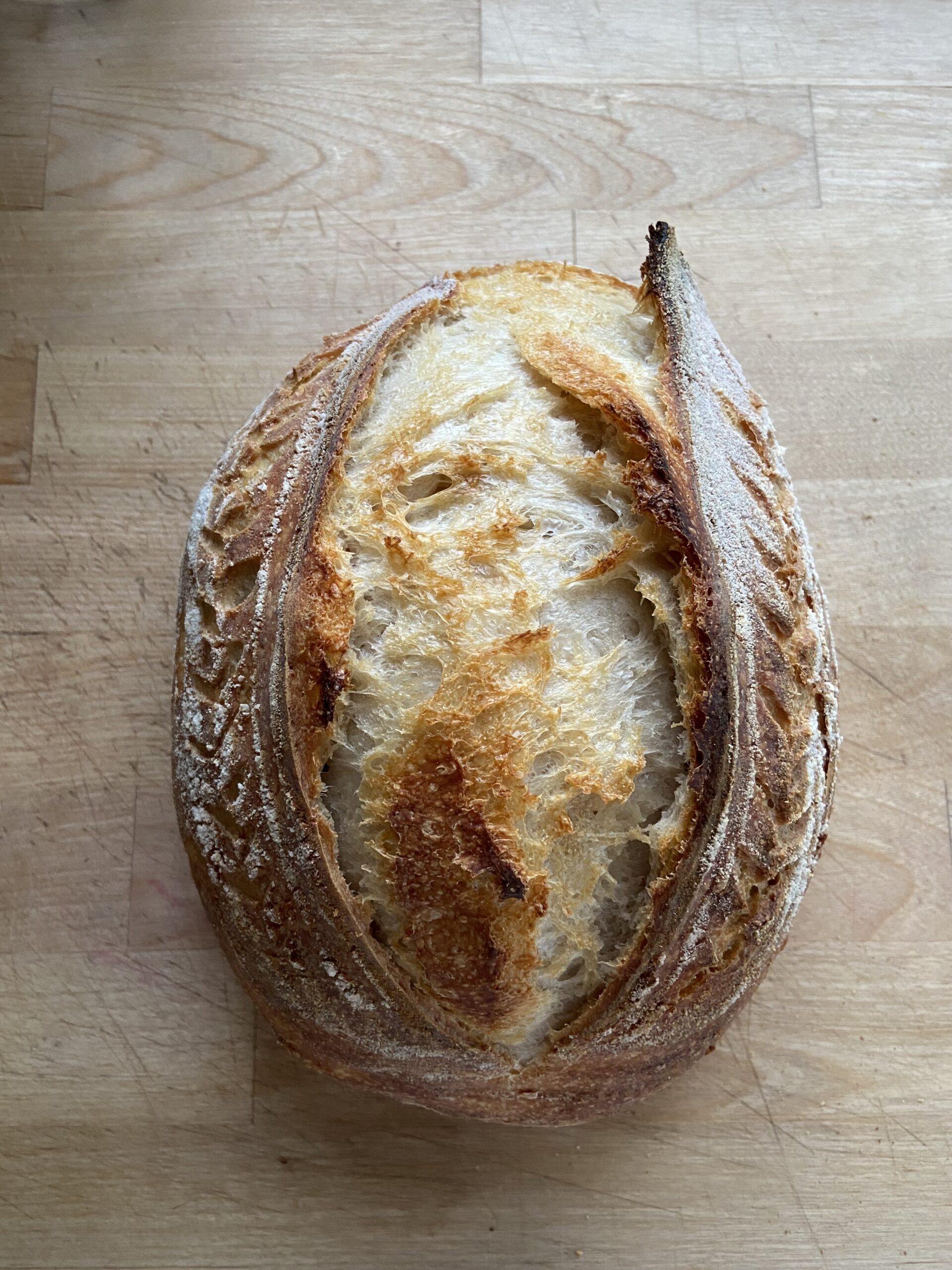
I realized that I don’t have my sourdough recipe written down anywhere, which is wild, because I bake a loaf at least 2x per week, and this recipe should get written down, so here we are. I’ve modified this recipe a bit over the years, but right now, a ratio ~300g water / 500g flour / 115g starter has been working pretty well. The more hydration you use, the harder it is to shape and work with. I also know you can get away with only 90g of starter for a bake, but I find that loaves don’t taste sour enough, so I bumped mine up to 115g. I still do not understand the science behind hydration ratios or how to get insanely gorgeous ears, how to get my loaf to not stick to my bowl after bulk fermentation, the inside crumb varies wildly from bake to bake, and sometimes I find that the less I care the better the loaf turns out. All that to say, I still feel like I barely understand what I’m doing, but by the grace of God, it works.
I want to have a word first on the timeline, because that aspect of a bake was incredibly confusing when I first started. So here’s a quick overview of what I do. I feed my starter around 6pm in the evenings. Around 6-7am the following morning, I’ll then get started with a bake. I’ll mix the stater, water, flour, and feed the original starter. I do my series of stretch and folds in the morning, if I’m home, and keep my eye on it around lunchtime. Usually by early afternoon, it’s ready for final shape before going in the banneton. More often than not, I’ll keep her in the fridge until the following day, when I have more time to bake.
Sourdough Loaf
Equipment
- Kitchen Scale
- large mixing bowl
- Dutch Whisk
- Kitchen towel
- Banneton Basket
Ingredients
- 115 grams active starter
- 300 grams warm water
- 12 grams salt
- 500 grams bread flour
Instructions
- In a large bowl, weigh your starter, add water. Mix well. Then add your bread flour. Mix as well as you can, dough will be quite shaggy, but it's fine. Cover bowl with a damp kitchen towel, and allow to rest for 30-60 minutes.
- Add salt, and with wet hands, mix well and shape your dough. Allow to rest for another 30 minutes or so. Come back, and do 1-3 rounds of stretch and folds, with 30 minutes of resting time, under a damp towel, in between rounds.
- Allow to bulk ferment for 4-12 hours (depends on time of year, elevation, how warm your kitchen is, etc.). Once it's ready, remove dough from bowl, fold, shape, and place into a banneton basket. Allow to cold proof in the fridge for at least 1 hour, but if you're not ready to bake, you can allow it to sit in the fridge covered for up to 48 hours until you're ready to bake.
- For the bake, you're going to want to preheat your Dutch oven for 1 hour in a 500 °F oven. Take your dough out of the fridge, final shape, score it, if you'd like, and quickly add it to your super hot Dutch Oven with the lid on, and bake at 500 °F for 25 minutes. See note below about parchment paper vs. ground cornmeal.
- After 25 minutes, lower your ovens temperature to 450 °F, remove the lid to the Dutch Oven, and bake for another 10-12 minutes.
- Allow your loaf to cool, and do not cut into it for at least 1 hour. The bread is still cooking, even out of the oven, so it's important not to cut into your loaf right away.