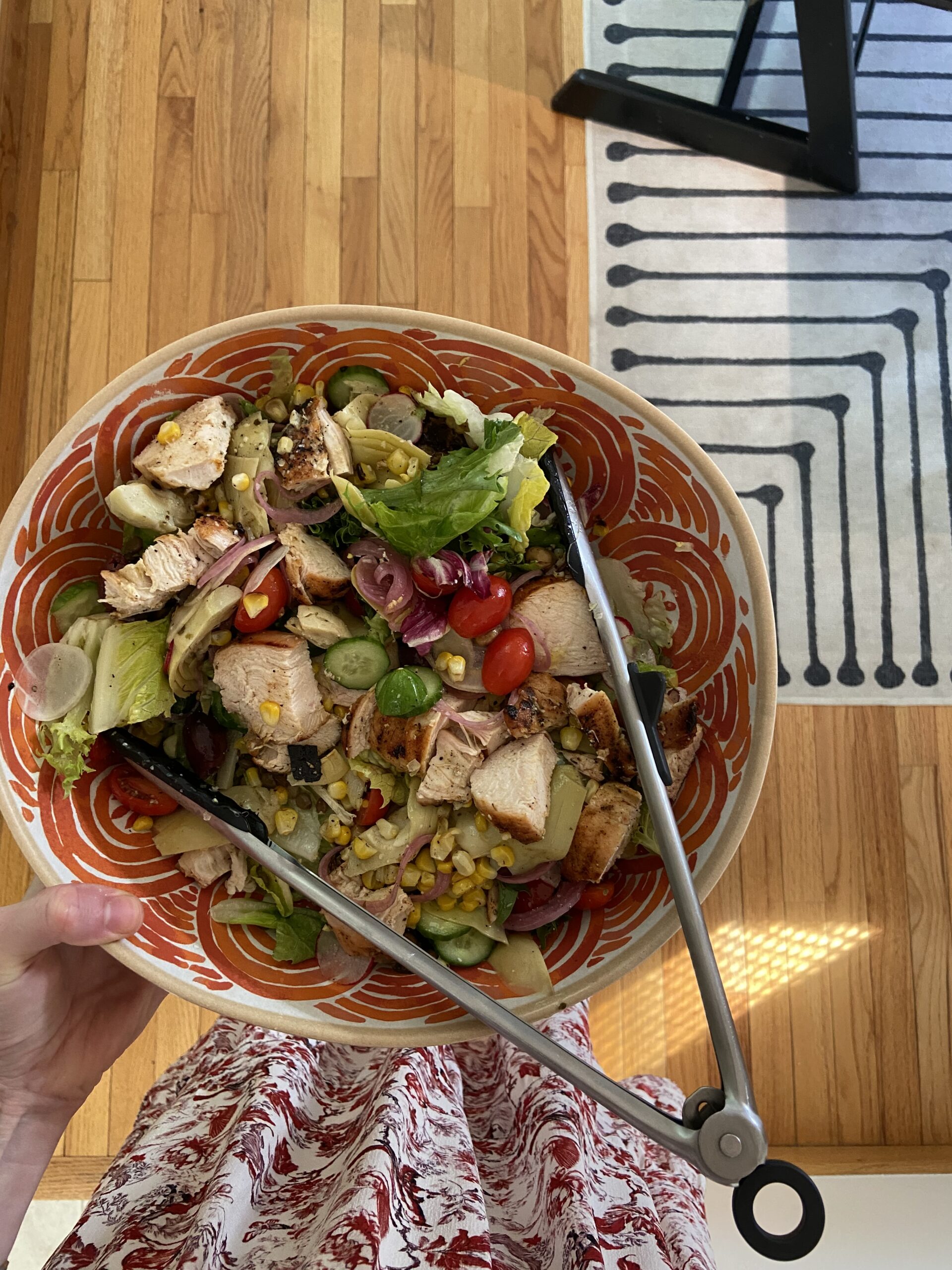
If you’ve ever stared into your fridge wondering, “Can this stretch… just a little further?” this one’s for you. Today is all about how to cook once and eat twice, with little fuss, little waste, and minimal weeknight stress. Let’s get into the strategy.
First Things First: Successful Meal Planning Starts on Paper ✍️
Before you batch, cook, or plan ahead, you need to know how many nights you’re cooking and what you’re eating.
I always suggest:
- Sit down with pen + paper
- List the nights you’re making dinner
- Choose an actual plan for each night
- Then build your grocery list
Meal planning feels like work in the beginning, but once you have a plan, everything else flows.
The Big Idea: Cook 3 Meals → Eat for 7 Nights 🍽️
This method is simple, magical, and deeply practical — especially in summer when you’d rather be outside than standing over a stove.
Here are three original meals we cook all the time:
- Pan-seared chicken with tomato-basil-balsamic pan sauce + brown rice + roasted broccoli
- Penne with homemade vodka sauce + meatballs + mixed green salad
- Rosemary + pepper crusted pork tenderloin with roasted potatoes + roasted green beans
(Again: swap pork for any preferred protein — chicken thighs, turkey tenderloin, or marinated tofu work great.)
How It Works: Batch Cooking 🔁
Batch cooking = making double or triple the amount while you already have the tools out.
You’re already:
- Heating a pan
- Making a sauce
- Using a pot
- Preheating your oven
- Washing dishes anyway
So… why not cook enough for two nights? Most recipes already serve 4–6. For a family of two adults + small kids, doubling is effortless and cost-effective. This is the key to cooking only three times a week while still serving home-cooked meals almost every night.
The Weekly Flow (Example)
Here’s how three dinners turn into a full week:
Monday
Cook double the pan-seared chicken, roasted broccoli, and brown rice.
→ Eat tonight + save the second half for Thursday.
Tuesday
Make a big batch of meatballs + a large pot of homemade vodka sauce.
→ Eat tonight + save the second half for Friday.
Wednesday
Cook a big rosemary-pepper tenderloin + extra-roasted potatoes and green beans.
→ Eat tonight + save the second half for Saturday.
Result:
- Monday → Chicken
- Tuesday → Meatballs
- Wednesday → Protein + veg
- Thursday → Chicken
- Friday → Meatballs
- Saturday → Protein + veg
✨ That’s six nights of dinners, usually under $80 in ingredients.
Night Seven: The Beloved “Everything Must Go” Meal ♻️
This is my favorite night of the week.
It’s when:
- There’s one cup of pasta left
- Two or three meatballs
- A handful of roasted potatoes
- Some rice
- A bit of green beans
- A stray serving of broccoli
We pull EVERYTHING out of the fridge and mix-and-match intentionally. It cuts down on food waste completely, resets the fridge, and sets us up fresh for the week ahead.
It’s like a capsule wardrobe, but for dinner: everything pairs with everything.
Adapt It to Your Household
If you don’t like my three sample meals, no problem at all. Choose any three dinners you love to cook and that store/reheat well:
- Chili
- Stir-fries
- Sheet-pan meals
- Soups
- Taco fillings
- Roasted proteins + sides
- Pasta dishes
- Veggie-heavy bowls
Just bulk them up and use the same Monday–Saturday rhythm.
Bonus: Leftovers Make Amazing Lunches 🥗
(And yes — we really need to rebrand the word “leftovers.” These are intentional batched meals.)
A pound of pasta? That’s at least two dinners + a lunch.
Big pot of rice? Lunch bowls for days.
Roasted veggies? Breakfast or lunch add-ins all week.
Batching doesn’t just stretch dinners — it feeds the whole rhythm of your home.
Final Thoughts
You can stretch three meals into a full week of home-cooked food.
You can make dinners easier, cheaper, and calmer.
And you can create margin in your evenings — especially during those long, golden summer nights ☀️🕶️.
Happy batching, friend!