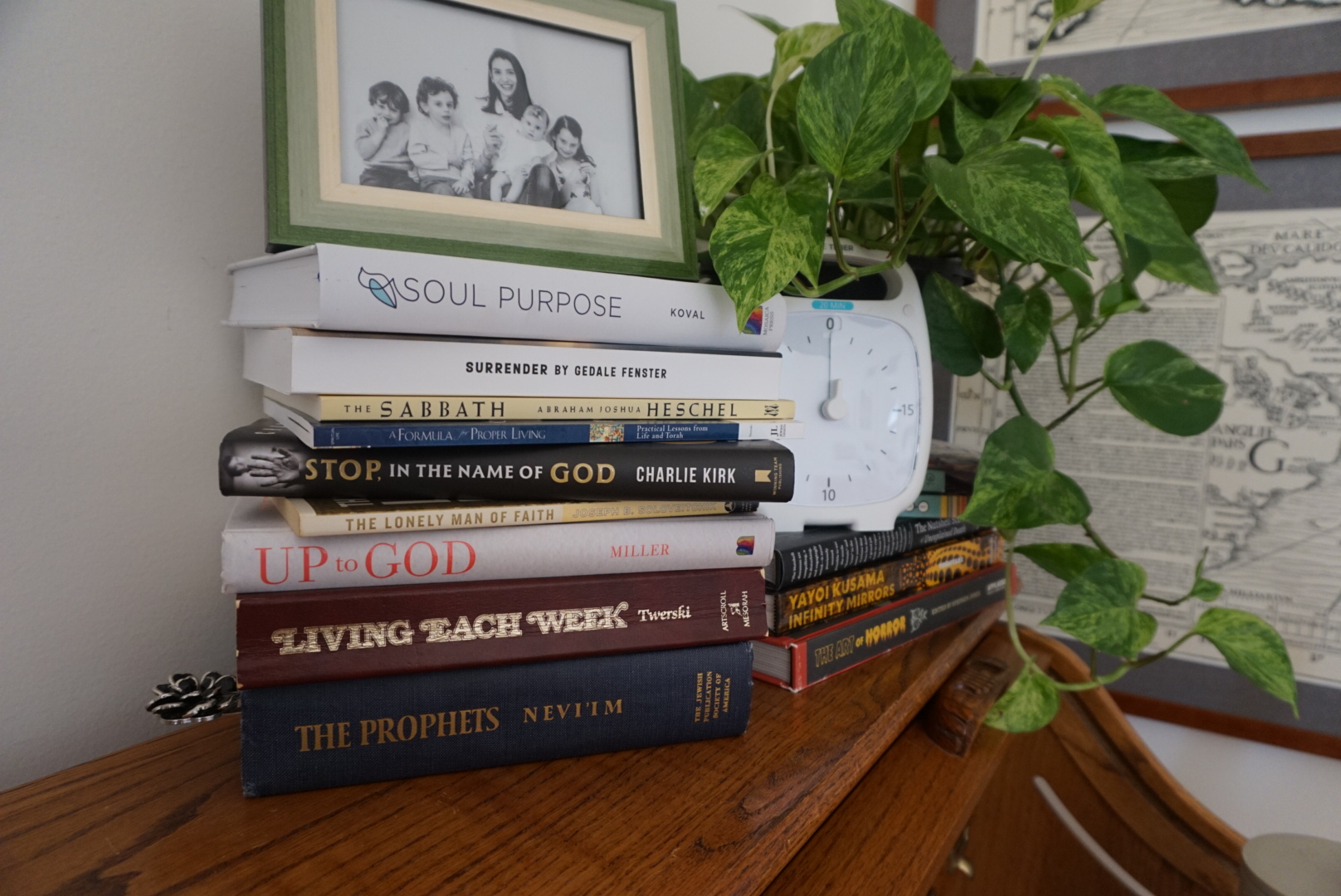
One of my favorite things about a new year is deciding what I want to learn. As I’ve gotten older, I’ve noticed something interesting: the books I’m drawn to often reveal more about my season of life than I realize. It’s a reflection of where I am and where I hope to grow. Looking at my non-fiction stack for 2026, a clear theme emerged: Healing.
Healing the body, the mind, relationships, and my nervous system. And perhaps most importantly, deepening my connection with God through all this said healing.
❤️ Marriage & Relationships
The first category on my list focuses on communication and relationships. I read Fight Right by John and Julie Gottman, a husband-and-wife team whose research on marriage has helped countless couples improve communication and strengthen their relationships.
I’m also revisiting You’re Not Listening by Kate Murphy. A re-read is one of the highest compliments I can give a book. Listening sounds simple, but the older I get, the more I realize how rare true listening has become. Between our phones, endless distractions, assumptions, and the temptation to formulate our response before someone finishes speaking, genuine listening is increasingly uncommon.
And yet it remains at the center of every healthy relationship. Whether we’re talking about marriage, friendship, parenting, or community, listening is often where connection begins.
⚡ Physical Health & Energy
Another major area of focus this year is physical health. I’m reading Good Energy by Casey Means, which explores the connection between metabolic health, nutrition, sleep, stress, and long-term wellness.
What draws me to books like this is their emphasis on systems rather than quick fixes. The older I get, the less interested I become in hacks and shortcuts. Instead, I’m drawn to understanding how all the pieces fit together.
Sleep affects energy.
Stress affects health.
Food affects mood.
Movement affects resilience. Everything is connected. The goal isn’t perfection. It’s understanding how to better care for the body God has entrusted to us.
🌿 A New Interest: Somatic Healing
Piggy backing off physical health and energy, earlier this year, our Jewish community hosted an all-day women’s health conference. Which I obviously signed up for without hesitation.
It ended up being one of those events that unexpectedly changed the trajectory of my year. Of my life, actually. And here’s why – during the conference, I attended a session led by a somatic therapist. I walked in curious and left completely fascinated.
For much of my life, I’ve approached healing intellectually. Talk it out. Read the book. Learn the concept. Apply the lesson. But somatic work introduced me to a different perspective: healing isn’t just something that happens in the mind. Our bodies carry stress, memories, habits, and patterns too. Sometimes, cognitive therapy isn’t sufficient enough, because trauma lives in the nervous system. Sometimes, you need a ground up approach.
That single seminar sent me down an entirely new reading path, and forever changed life, after deciding to undergo somatic therapy myself.
🧠 Trauma, Healing & The Nervous System
This is probably the category receiving the most attention from me right now. On my nightstand you’ll find The Body Keeps the Score by Dr. Bessel van der Kolk, Healing Trauma by Peter Levine, and Voice Dialogue by Hal and Sidra Stone.
Five years ago, I never would have predicted I’d be reading books about trauma, nervous system regulation, or somatic healing. Yet here we are.
As I’ve begun learning more about this field, I’ve become increasingly fascinated by the relationship between the mind and body. These books explore how experiences can shape us in ways we don’t always consciously recognize and how healing often requires more than simply understanding our stories intellectually.
I also have a soft spot for husband-and-wife writing teams. There is something deeply inspiring about couples who spend decades exploring ideas together and sharing what they’ve learned with the world.
📖 Torah Study & Spiritual Growth
The largest category on my reading list is Torah study. This year I’m continuing my Parsha Project for 5786, and one of the resources I’ll be using is The Rational Bible series by Dennis Prager.
I’ll also be reading from several Jewish authors and teachers whose work I deeply appreciate, including Rabbi Abraham Twerski, Gedale Fenster, Ruchi Koval, Nahum Sarna, and D’Vorah Miller.
I should pause for a moment and mention what a gift it is to know D’Vorah personally. She is the best, so thoughtful, encouraging, and I’m blessed to attend several of her in person women’s talks each year.
Many of these Torah-centric books are designed to be studied slowly. A page in the morning. A chapter each week. A thought to carry throughout the day. A note scribbled into the margin.
Earlier this year I had established a wonderful rhythm of daily study, but I’ve drifted from that habit recently. Perhaps that’s all the more reason to recommit. After all, the goal isn’t simply finishing books. The goal is transformation.
✨ A Few Christian Books I Continue to Recommend
Although I’m Jewish, there are a handful of Christian books I continue to recommend because their wisdom feels both practical and universal.
One is Habits of the Household, which offers thoughtful ideas for creating meaningful family rhythms and routines. Another is The Ruthless Elimination of Hurry by John Mark Comer.
The Ruthless Elimination of Hurry is one of those rare non-fiction books that I’ve faithfully gone back and revisited at least 2x per year, for 5 years running now. We live in a culture that celebrates busyness, and I despise it. Hurry is often worn like a badge of honor. Yet every time I return to this book, I’m reminded that rushing through life is not the same thing as living it. It’s a lesson I apparently need to hear repeatedly. And I bet you could use it too.
💛 What I’m Really Studying
When I step back and look at this entire reading list, I realize these books are all pointing toward the same questions:
How do we become whole?
How do we heal our bodies?
How do we strengthen our marriages?
How do we improve our relationships?
How do we regulate our nervous systems?
How do we create enough margin in our lives to hear God’s voice?
And perhaps most importantly, how do we deepen our understanding of who God is and what He is asking of us?
Because ultimately, that is what I’m studying this year. And I’m seeking a deeper relationship with God.
I’d love to hear from you: What are you reading right now? What is God teaching you in this season? What subjects seem to be calling for your attention this year?